By Marcello Ferrada de Noli, Professor Emeritus –– Founder, Swedish Professors and Doctors for Human Rights (SWEDHR)
This article –containing excerpted texts from a recent published book –[*] explores how the United States has been deeply involved in Latin America from the early Cold War era up to today, highlighting an ongoing pattern of intervention that has strongly influenced the region’s politics and economy. Drawing on declassified materials, historical records, and scholarly research, the article examines a continuum of operations––from the 1954 CIA-led coup in Guatemala to the 2026 military action in Venezuela– as manifestations of a broader era of empire-led interference. Each case illustrates the intersection of geopolitical strategy and corporate interest, revealing how interventions justified in the name of “democracy” or “security” a) often resulted in dictatorship, civil conflict, and systemic human rights violations, and b) have consistently served to advance U.S. geopolitical and business interests. Economic analysis estimates that U.S. corporations have taken out between $2.8 and $3.3 trillion in revenue from Latin America (1954–2025, adjusted for inflation).
The devastating human toll, with hundreds of thousands of lives lost and societies destabilized, is detailed through country-by-country examples. Beyond mapping specific events, the article explores their long-term consequences, assessing the enduring asymmetries of power between United States and Latin America. By situating these interventions within the global context of postwar imperial politics, the study suggests that U.S. involvement constitutes an ongoing structure of domination with profound human, political, and economic implications that persist into the twenty-first century.
[*] Available for free download at Libertarian Books Europe
CONTENTS:
Abstract 12
Prologue. 13
Introduction. 16
PART I: SYNOPSES OF U.S. INTERVENTIONS IN LATIN AMERICA. 18
The US-Backed Dictatorships in Argentina. 19
The U.S.-Backed Coup and Military Dictatorship in Brazil 23
The U.S.-Orchestrated Coup in Chile and the Pinochet Dictatorship 30
The U.S. Intervention in the Dominican Republic. 33
Military Operations and Repression of the Resistance. 37
Consequences 38
The U.S. Orchestrated Invasion of Cuba: Playa Girón. 40
The U.S.-Driven Civil War in El Salvador. 43
The U.S. Invasion of Grenada. 45
Guatemala: The Overthrow of Democracy and Prolonged Civil War. 48
The U.S.-Backed Coup and Dictatorship in Haiti 51
The U.S.-backed coup in Honduras. 53
The U.S.-Backed Contra War in Nicaragua. 55
The U.S. Invasion of Panama. 57
The Roots of Tension: Early U.S. Presence and the 1964 Student Uprising in Panama 57
1989, capture of Noriega. 63
U.S. Covert, Paramilitary, and Economic Operations in Venezuela (2002–2026) 65
Operation Gideon: A Case Study in Privatized Intervention. 65
Long-Term Campaigns: Coups, Sanctions, and Cyber Operations 66
The 2026 Armed Intervention and Its Consequences 66
As of mid-January 2026. 69
Other Covert Operations in Latin America. 71
Surveillance and Anti-Sandinista Activity in Belize (British Honduras) 71
Covert Intervention in Costa Rica. 71
Proxy Warfare and Contra Training in Honduras–Nicaragua Border 71
Counterinsurgency and Intelligence Operations in Perú. 71
Plan Colombia: Security, Counterinsurgency, and Democracy Building. 72
Operation Condor and U.S. Support for South American Dictatorships. 73
Notable Assassinations Orchestrated by Operation Condor. 75
Operation Condor in the Nordic Countries 75
PART II: THE HUMAN COSTS. 79
Estimated casualties. Totals 80
Killed. 80
Missing or Disappeared. 80
Injured. 80
Combined Total 80
Notes on Data Limitations 80
Graphic 1: Estimated Casualties from U.S: -Backed Interventions in Latin America (1954–January2026) 81
Table 3: Estimated Casualties from U.S: -Backed Interventions in Latin America (1954–January2026) 81
Table 4: Estimated Casualties per country, derived from U.S: -Backed Interventions in Latin America (1954–January2026) 82
Table 5: Estimated Total of Casualties, All Countries Comprised. 83
Additional Considerations: Unlisted Casualties and Indirect Repression. 83
PART III: ECONOMIC EXPLOTIATION. 84
U.S. Corporate Revenues from Latin America (1954–2025) 85
Estimated Aggregate Revenue. 85
Table 6: Sector Breakdown: 86
Interpretation. 86
In summary: 87
Table 7: Review of important US Interventions and Coups in Latin America 1840s–2020s. 88
Conclusion: Patterns and Consequences of U.S. Intervention in Latin America 90
Recurring Patterns of External Interference, Human and Institutional Costs 90
Shifting Alliances and Evolving U.S. Influence via “Invisible Interventionism 91
References and Notes. 92
Consulting references 95
Bibliographic Notes 96
(Following, summaries from some of the book’s chapters/sections)
From Prologue
This work is shaped by a process of research, reflection, and lived experience. It serves as both an analytical account and a personal testimony. While its main aim is to examine the structural and economic patterns of United States interventions in Latin America, it is also informed by the perspective of someone who has witnessed and, at times, participated in the events that have defined this history.
The driving question behind this book is a persistent one: how have so many nations on our continent been repeatedly subjected to external domination, always under new rationales, but consistently resulting in similar consequences—dictatorships, civil wars, and economic dependence? In seeking answers to this question, I have relied not only on archival sources, declassified documents, and economic data, but also on memory, conversation, and personal archives accumulated over decades.
I do not present this subject as a detached observer. My experiences during the Panama uprisings in January 1964, the resistance against dictatorship in Chile, and leading counterintelligence efforts in Sweden to neutralize Operation Condor activities in Scandinavia, are not just historical events. They are integral to the shared experience that has shaped the conscience of my generation. The influence of these events is therefore inseparable from the narrative that follows.
The goal of this work is to connect individual human experiences with the broader structures of power that produced them. It seeks to demonstrate that the economic and political interventions of the United States in Latin America were not isolated incidents, but rather manifestations of a continuous system of control that persists into the present century. The pattern is unmistakable: wherever language such as “freedom” and “security” was used, the reality that ensued was exploitation, repression, torture, enormous live costs and the undermining of sovereignty.
In presenting this material, I do not intend to impose a definitive interpretation. My hope is to offer evidence—both documented and lived—that allows readers to discern the logic of empire as it has unfolded over the last seven decades. The facts are presented to speak with their own moral weight.
From Introduction
Throughout the twentieth and twenty-first centuries, the United States has repeatedly intervened in Latin American nations, shaping the political, social, and economic landscape of the region –often with devastating consequences for local populations (Chomsky, 1993; [i] Galeano, 1973; [ii] Grandin, 2006).[iii]
These actions have typically supported the installation or maintenance of dictatorial regimes, frequently justified by the protection of American economic interests and the suppression of leftist movements. The aftermath of such interventions has been marked by widespread human rights abuses, civil wars, and profound social and economic disruption. Below is a structured account of some of the most significant US-backed actions in Latin America.
This book explores how the United States has been deeply involved in Latin America from the early Cold War era up to today, highlighting an ongoing pattern of intervention that has strongly influenced the region’s politics and economy.
Drawing on declassified materials, historical records, and scholarly research, the book examines a continuum of operations––from the 1954 CIA-led coup in Guatemala to the 2026 military action in Venezuela– as manifestations of a broader era of empire-led interference. Each case illustrates the intersection of geopolitical strategy and corporate interest, revealing how interventions justified in the name of “democracy” or “security” a) often resulted in dictatorship, civil conflict, and systemic human rights violations, and b) have consistently served to advance U.S. geopolitical and business interests. Economic analysis estimates that U.S. corporations have taken out between $2.8 and $3.3 trillion in revenue from Latin America (1954–2025, adjusted for inflation).
The devastating human toll, with hundreds of thousands of lives lost and societies destabilized, is detailed through country-by-country examples. Beyond mapping specific events, the article explores their long-term consequences, assessing the enduring asymmetries of power between United States and Latin America. By situating these interventions within the global context of postwar imperial politics, the study suggests that U.S. involvement constitutes an ongoing structure of domination with profound human, political, and economic implications that persist into the twenty-first century.
[i] Galeano, E. (1973). Open Veins of Latin America. Siglo XXI Editores.
[ii] Chomsky, N. (1993). Year 501: The Conquest Continues. South End Press.
[iii] Grandin, G. (2006). Empire’s Workshop: Latin America, the United States, and the Rise of the New Imperialism. Metropolitan Books.
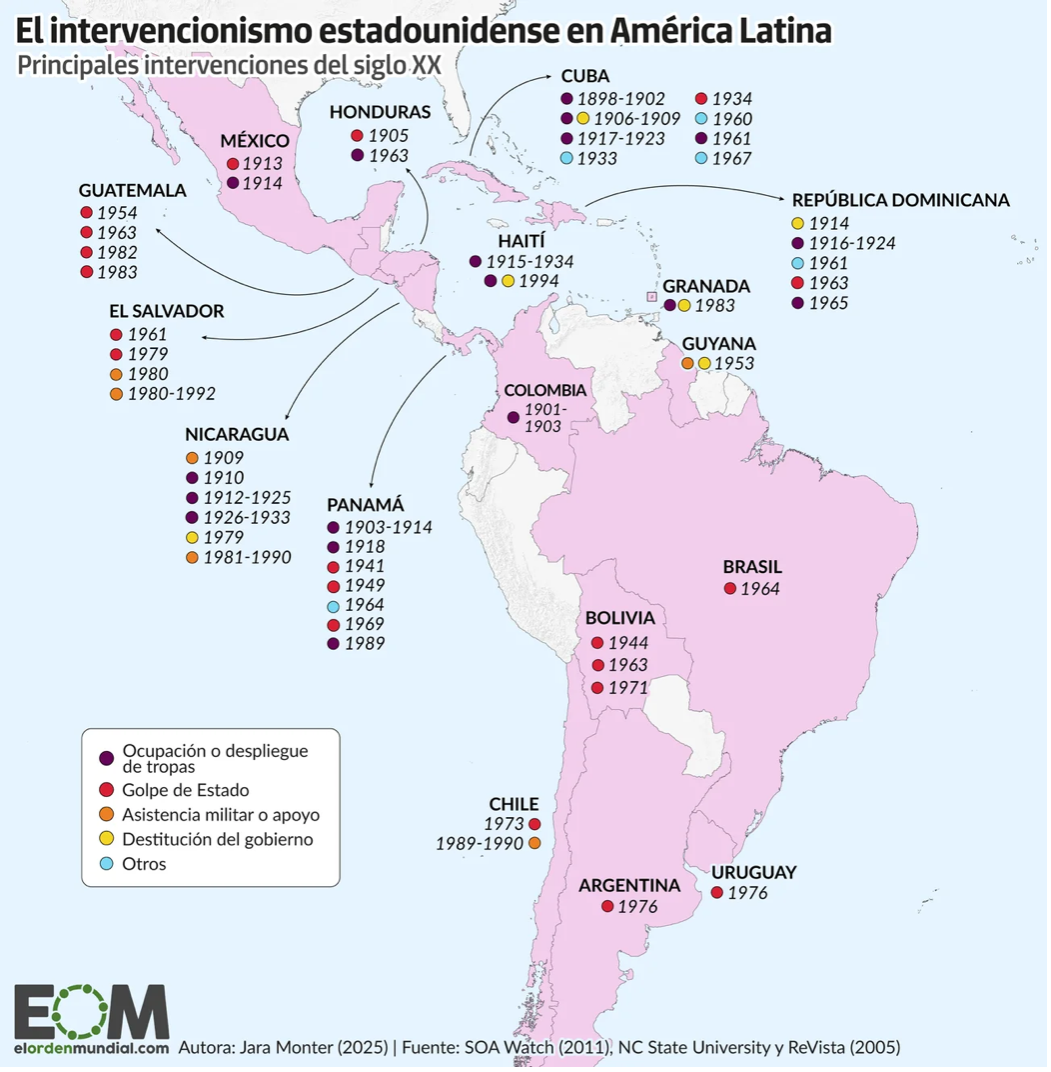
The U.S. Intervention in the Dominican Republic
In the Dominican Republic, 1965, the democratic process was abruptly disrupted following the electoral triumph of Juan Bosch, a renowned author and social democrat. Despite being legitimately elected, Bosch’s presidency was swiftly ended by a coup d’état, which ousted him from power. This undemocratic action provoked widespread outrage among the population, leading to a popular uprising determined to restore Bosch to office and defend the country’s democratic will.
The United States responded to this movement by intervening militarily. In a decisive show of force, 20,000 U.S. Marines landed in the Dominican Republic, not to support the return of democratic governance, but rather to bolster the coup leaders and suppress the pro-Bosch rebellion. The intervention effectively crushed the revolutionary efforts of the citizens who sought to reinstate their elected president.
The consequences were devastating –more than seven thousand people lost their lives as a direct result of the conflict.
Toll: 7,000 killed
The US-Backed Dictatorship in Argentina
In Argentina, 1976, the armed forces, with backing from the United States, succeeded in overthrowing Isabel Perón. This intervention marked the onset of a harrowing dictatorship supported by the US, notorious for its brutality and systematic human rights violations. During this dark period, over thirty thousand civilians lost their lives, and tens of thousands more were subjected to abductions and torture. The regime’s campaign of repression left a profound scar on Argentine society, with families mourning the disappearance and suffering of loved ones. The dictatorship stands as a stark example of the devastating consequences of foreign intervention in Latin America, illustrating the tragic human cost of political interference.
During the period of military rule in Argentina, which was supported by the United States, the country endured a campaign of repression that resulted in the deaths of more than thirty thousand civilians. The regime’s systematic violence and disregard for human rights left a profound and lasting impact on Argentine society. Families and communities across the nation suffered immense loss, as thousands were killed, abducted, or subjected to torture. The legacy of this dictatorship is marked by grief, trauma, and a persistent struggle for justice and reconciliation.
Toll: 30,000 killed
Guatemala: The Overthrow of Democracy and Prolonged Civil War
In Guatemala, 1954, the United States, acting through the CIA, played a central role in toppling the democratically elected government of President Jacobo Árbenz. Árbenz’s progressive agrarian reform policies posed a direct threat to the economic interests of the American United Fruit Company, prompting US intervention.
As detailed by Blum (1995) and Grandin (2006), the CIA’s Operation PBSUCCESS exemplified Washington’s defense of corporate interests under the guise of anti-communism. The CIA’s Operation PBSUCCESS, as documented by Blum (1995) [4] and Grandin (2006), stands as a clear example of how Washington prioritized the interests of American corporations in its foreign policy. Although the intervention was publicly justified as a measure to combat the perceived threat of communism, the underlying motivation was to safeguard the economic interests of U.S. businesses, particularly the United Fruit Company. This covert operation set a precedent for the use of anti-communist rhetoric to legitimize interventions that ultimately served private corporate agendas, rather than the promotion of genuine democratic values.
The CIA orchestrated a coup that resulted in the removal of Árbenz from power, shattering the country’s nascent democratic process.
Following the coup, a military dictatorship led by Carlos Castillo Armas was swiftly established. This new regime, imposed with foreign backing, plunged Guatemala into a period of severe instability and violence. The country was engulfed in a civil war that persisted for more than thirty-six years, marking one of the longest and most devastating conflicts in Latin American history.
The consequences of these events were catastrophic for the Guatemalan people. The prolonged civil war resulted in the deaths of over 200,000 individuals, while more than 45,000 people were reported missing.
The legacy of the US-backed coup and subsequent dictatorship left deep scars on Guatemalan society, marked by mass suffering, loss, and ongoing social turmoil.
Toll: 200,000 killed, > 45,000 reported missing.
The U.S.-Backed Coup and Military Dictatorship in Brazil
In Brazil, 1964, the administration of President João Goulart caused considerable unease within the United States government, primarily due to his left-leaning policies and his commitment to land reform. These progressive initiatives were perceived as a threat to American interests in the region, resulting in direct intervention from the United States.
To counter Goulart’s reforms, the United States provided significant logistical and financial support to the forces orchestrating the 1964 coup d’état. This intervention led to the overthrow of Goulart and the establishment of a military dictatorship that would govern Brazil for over two decades, lasting until 1985, during which approximately 10,000 Brazilians lost their lives.
As observed in the instance of other comparable interventions by the United States, such as the events in Chile, the actions undertaken were not isolated occurrences. Drawing on the analyses of Chomsky (1991) [5] and Grandin (2006),[6] it is evident that these interventions formed part of a broader, systematic strategy implemented across the Western Hemisphere. This approach was specifically aimed at suppressing reformist movements that were perceived as posing a challenge to U.S. hegemony in the region. The interventions were therefore coordinated and deliberate, targeting any efforts for reform that threatened to alter the existing balance of power favouring the United States.
The consequences of this period were devastating for Brazilian society. Under the authoritarian regime, repression was widespread and brutal. The military dictatorship was responsible for the deaths of approximately ten thousand people, marking a dark chapter in the nation’s history and exemplifying the tragic impact of foreign interference in Latin America.
Toll: 434 Brazilians lives.
The U.S.-Orchestrated Coup in Chile and the Pinochet Dictatorship
In Chile, 1970–1973, the United States played a decisive role in orchestrating the coup that toppled President Salvador Allende’s progressive government on 11 September 1973. Seeking to safeguard its interests, the US backed a military intervention. The military, backed by the US, launched a violent assault on the presidential palace. President Allende lost his life during these dramatic events, marking an abrupt end to Chile’s democratic experiment
This marked the beginning of Augusto Pinochet’s regime, a dictatorship that was supported by the United States and notorious for its brutality.
Pinochet established a repressive dictatorship that would dominate Chilean society for the next eighteen years. Although there was some resistance in the aftermath of the military takeover, it proved sporadic and was quickly suppressed. Many, including myself, were then detained and became prisoners under Pinochet’s brutal regime –experiencing firsthand the regime’s cruelty and repression.
Toll: Over 3,000 killed and 40,000 victims of torture, imprisonment, or disappearance.
In Nicaragua, the United States financed, trained, and armed the Contras to overthrow the Sandinista government. Ten years of guerrilla warfare ended the lives of 50,000 people and plunged the country into a deep economic and political crisis that continues to this day.
The U.S.-Backed Contra War in Nicaragua
In Nicaragua, 1981–1990, the United States played a decisive role in destabilising the government by providing financial support, military training, and weaponry to the Contra forces. This direct intervention was aimed at overthrowing the Sandinista government, which had come to power following the revolution against the Somoza dictatorship.
For a decade, Nicaragua was engulfed in a brutal guerrilla war, with the Contras engaging in sustained armed conflict against the Sandinista administration. The ongoing violence resulted in the deaths of approximately 50,000 people, inflicting immense suffering upon the population.
The repercussions of this protracted war were dire. Nicaragua was left in a state of deep economic and political crisis, the effects of which continue to reverberate in the country even today. The legacy of the conflict includes widespread poverty, political instability, and social upheaval, underscoring the devastating consequences of foreign intervention in the region.
Toll: ca. 50,000 people died
The U.S.-Backed Coup and Dictatorship in Haiti
2004 – eight months following Haiti’s first elections, the nation’s social democratic president, Jean-Bertrand Aristide, was overthrown in a coup orchestrated by military forces that had been trained and funded by the United States. This intervention led directly to the collapse of Haiti’s fledgling democracy.
The military takeover brought Raoul Cédras to power, inaugurating a period of oppressive dictatorship. Under Cédras’s rule, the country was plunged into violence and fear, with more than four thousand people losing their lives as a result of the regime’s brutality. The consequences of this U.S.-supported coup deeply scarred Haitian society, further destabilising the nation and undermining its democratic aspirations. It is the longest opcupation by the United States in the Carebbean (18 years).
Toll: > 4,000 dead
The U.S.-Driven Civil War in El Salvador
(1980–1992) For over a decade, El Salvador was embroiled in a devastating civil war, marked by fierce conflict between the authoritarian government and a leftist insurgency. The United States played a pivotal role in sustaining this conflict, providing substantial financial resources and military aid to the Salvadoran army and affiliated death squads, known locally as the Escuadrones de la Muerte.
Trained and armed with support from the United States, the Escuadrones de la Muerte operated with impunity throughout the civil war in El Salvador.
These groups systematically targeted civilians, community leaders, and religious figures, employing terror as a method of maintaining control and suppressing dissent. Their actions resulted in a staggering human cost: more than 75,000 people were killed, and a further 8,000 individuals disappeared during this period of conflict.
Toll: > 75,000 killed, ca. 8,000 people disappeared
The U.S. Invasion of Panama
In 1989, the United States undertook its largest military deployment in the Caribbean, initiating a significant operation aimed at Panama. This action culminated in the full-scale invasion of the country, with the objective of overthrowing General Manuel Antonio Noriega, who was then serving as Panama’s leader.
During the course of the operation, the United States landed 26,000 troops in Panama. The military intervention resulted in the apprehension of General Noriega, who was subsequently taken into custody and transported to the United States.
Toll: 1,000–1,500, estimated. Injuries: 3,000–5,000, primarily civilians from Panama City and El Chorrillo.
The U.S. Invasion of Grenada
The United States invasion of Grenada, designated as Operation Urgent Fury, took place between October 25 and November 3, 1983. The primary objective of the military intervention was to remove the government led by Maurice Bishop, which had recently been overthrown in a military coup. The U.S. justified its actions by citing the need to “protect American citizens” residing on the island, most notably a group of medical students. The operation led to the rapid deposition of the ruling faction and marked a significant moment in U.S. military engagement in the Caribbean region.
The invasion involved ~7,000 U.S. troops and ~300 troops from Caribbean nations under the Organization of Eastern Caribbean States (OECS).
The United Nations General Assembly condemned the invasion as a violation of international law (Resolution 38/7, 1983).
Despite international criticism, the U.S. installed an interim government and restored pro-Western governance by late 1984.
The military operation on Grenada involved a substantial deployment of forces, with approximately 7,000 troops from the United States participating in the intervention. In addition, around 300 troops from various Caribbean nations, operating under the auspices of the Organization of Eastern Caribbean States (OECS), joined the U.S. forces in the campaign.
This action drew widespread international condemnation. The United Nations General Assembly responded by adopting Resolution 38/7 in 1983, which explicitly denounced the invasion as a violation of international law.
Despite facing significant criticism from the international community, the United States proceeded to install an interim government on the island. By late 1984, pro-Western governance had been restored in Grenada, marking the conclusion of the intervention and a shift in the island’s political trajectory.
Toll: 150–200 fatalities (Human Rights Watch)
The U.S.-backed coup in Honduras
In Honduras, 2009, The United States via direct and covert operations supported the coup against the sitting president Manuel Zelaya.
After the Supreme Court issued an order to apprehend Zelaya –in a bid to impede his proposition for a non-binding referendum on the Constitution of the country. The Army abducted the president Zelaya, transported him to Costa Rica and installed an interim president (Roberto Micheletti). Popular pretests ensued amidst curfews, press censorship and suppression of other civil liberties. [i]
The U.S: Bureau of Democracy, Human Rights, and Labor reported the following human rights problems as a direct consequence of the coup:
“Unlawful killings by members of the police and government agents; arbitrary and summary killings committed by vigilantes and former members of the security forces; harsh prison conditions; violence against detainees, and corruption and impunity within the security forces; lengthy pretrial detention and failure to provide due process of law; arbitrary detention and disproportionate use of force by security forces after the June coup; politicization, corruption, and institutional weakness of the judiciary; erosion of press freedom; corruption in the legislative and executive branches; limitations on freedom of movement and association; government restrictions on recognition of some nongovernmental organizations (NGOs); violence and discrimination against women; child prostitution and abuse; trafficking in persons; discrimination against indigenous communities; violence and discrimination against persons based on sexual orientation; ineffective enforcement of labor laws; and child labor.” [ii]
The socioeconomic consequences of the U.S.-backed military coup in Honduras were devastating. Following the coup, poverty rose by 13.2% and extreme poverty by 26.3% within three years. In contrast to the times of the Zelaya presidency – where the economy in Honduras performed well– [iii] it has dramatically declined until present day.
The U.S. in Venezuela
In addition to overt military actions, the United States has also been linked to covert and intelligence operations within Venezuela. One notable example is the failed Operation Gideon, which took place in 2020. This operation was a private paramilitary attempt associated with U.S. contractors, rather than an official U.S. military mission.
Operation Gideon did not involve any formal participation by the United States military. The incident resulted in the deaths of eight Venezuelans and the arrest of thirteen others, all of whom were local to Venezuela. The lack of direct U.S. military involvement distinguishes this event from other interventions in the region, underscoring the complex nature of covert operations and their consequences on the ground. In sum, principally between 2002, 2019 and 2025, the United States conducted covert operations and coup attempts in Venezuela. In 2002 the coup against Chávez failed.
Most recently, in January 2026, the United States initiated a military operation –which included aerial bombardment to military installations– that ended with the kidnapping of Venezuela’s president Nicolás Maduro and his spouse. Allegations as Maduro being “president of the Cartel de Los Soles”, a narcotraffic organisation, were soon dismissed in the U.S. as false.
Toll: Not yet officially reported.
The U.S. Orchestrated Invasion of Cuba: Playa Girón
The United States orchestrated an invasion of Cuba, representing a unique instance in modern times where a U.S.-backed military attempt to overthrow a Latin American government was met with failure.
In 1961, under the administration of President John F. Kennedy, the United States planned and executed an invasion at Playa Girón, also known as the Bay of Pigs, in Cuba. The operation was designed to overthrow the revolutionary government established by Fidel Castro.
The invasion force assembled for the 1961 invasion to Cuba was composed of approximately 1,400 Cuban exiles. These individuals were trained and armed by the Central Intelligence Agency (CIA), with their training taking place in Guatemala and Nicaragua. In support of the amphibious assault, around eight B-26 bombers—painted to resemble Cuban aircraft by bearing Cuban insignia—were deployed to provide air cover and attack ground targets. Additionally, U.S. Navy support ships were stationed offshore to assist the invasion effort.
Although the mission was officially classified as “non-combat” for the United States, covert participation by U.S. personnel did occur. American pilots and advisers took part in the operation behind the scenes. During the course of the invasion, four U.S. pilots affiliated with the CIA lost their lives, as did two other U.S. military personnel involved in the campaign.
The invasion, however, was met with strong resistance from the Cuban revolutionary forces led by Fidel Castro himself. Ultimately, the invading forces were defeated, and the attempt to topple the Cuban government ended in failure. This episode remains a significant moment in the history of U.S.–Latin American relations. This event stands as the only occasion in recent history when such an invasion, directed by the United States, was successfully repelled.
Toll: ~300–350 fatalities, ~600–900 injured.
Other Covert Operations in Latin America
Surveillance and Anti-Sandinista Activity in Belize (British Honduras)
During the 1880s, the United States initiated surveillance activities in Belize, then known as British Honduras. These operations were part of broader efforts targeting anti-Sandinista elements, reflecting early American involvement in the political dynamics of Central America.
Covert Intervention in Costa Rica
In 1955, the United States covertly supported an invasion aimed at overthrowing José Figueres, the then President of Costa Rica. Despite this backing, the invasion was unsuccessful, highlighting the complexities and risks associated with clandestine foreign interventions.
Proxy Warfare and Contra Training in Honduras–Nicaragua Border
By 1980, the United States escalated its proxy war against the Sandinista government in Nicaragua. Along the Honduras–Nicaragua border, American operatives established training bases for the Contra rebels, facilitating a sustained campaign against the Sandinistas through indirect means.
Counterinsurgency and Intelligence Operations in Perú
Between 1965 and 1967, and again during the 1990s, the United States undertook covert operations in Perú. These activities primarily focused on counterinsurgency and the provision of intelligence training to local security forces, reflecting ongoing efforts to shape the internal security apparatus of Latin American nations.
Plan Colombia: Security, Counterinsurgency, and Democracy Building
Since 2000, the United States has implemented “Plan Colombia,” a comprehensive security programme encompassing counterinsurgency, anti-narcotics operations, and initiatives to strengthen democratic governance within Colombian government institutions. The plan incorporated covert operations, with CIA involvement documented between 2000 and 2005. While Plan Colombia openly provided financial support, it also relied on secretive tactics to achieve its objectives.
U.S. Support for South American Dictatorships and Operation Condor
The dictatorships that emerged in Uruguay, Bolivia, Ecuador, Peru, and Paraguay received considerable support from the United States. This backing was not limited to political endorsement but included economic assistance and logistical aid, all designed to ensure the stability and longevity of these authoritarian regimes.
A significant aspect of U.S. involvement was the direct role played by Central Intelligence Agency (CIA) agents in shaping the tactics of these regimes’ security apparatuses. One such figure, Dan Mitrione, became notorious for instructing local security forces in methods of torture and citizen repression. These efforts were part of a broader framework known as Operation Condor.
Operation Condor was founded and coordinated by the United States in collaboration with the military dictatorships across South America.
Its primary objective was to suppress leftist movements throughout the continent. This campaign of repression was characterised by the widespread detention and torture of thousands of citizens, as well as the targeted assassination of political opponents.
Galeano’s (1973) foundational analysis of the “open veins” of Latin America offers a critical framework for understanding the region’s persistent economic challenges. In his work, Galeano highlights how the extraction of natural resources from Latin America has historically benefited foreign interests at the expense of local development. His critique foresaw the patterns of profit repatriation and the resulting economic dependency that would later be substantiated by empirical data. By examining the mechanisms through which wealth is transferred out of the region, Galeano’s insights remain highly relevant to contemporary discussions on the structural causes of underdevelopment in Latin America.
As Grandin (2019) contends, [7] Latin America has consistently functioned as both a testing ground and a reflection for the exercise of U.S. imperial power. This dynamic has endured over time, shaping the nature of relations across the hemisphere.
The cumulative evidence of human suffering and economic loss presented throughout this article underscores a recurring pattern in these interactions: intervention is employed as a deliberate policy tool, while exploitation emerges as the enduring legacy.
Together, these patterns reveal the persistent influence of U.S. strategy in the region and the costs borne by Latin American societies.
Notable Assassinations Orchestrated by Operation Condor
Operation Condor was directly responsible for a series of high-profile assassinations and targeted attacks against opponents of the military regimes in South America. Among the most notable victims was Orlando Letelier, Chile’s ambassador to the United States, who was assassinated in Washington D.C. The operation also targeted military leadership: Carlos Prat, former commander in chief of the Chilean Army and a close associate of President Allende, was killed while in exile in Buenos Aires.
In Argentina, Edgardo Enríquez Espinosa, who served as the head of the Comité Exterior of the Movement of the Revolutionary Left (MIR), was also murdered as part of this coordinated campaign. The reach of Operation Condor extended beyond assassination; it included failed attempts as well. Andres Pascal, nephew of Salvador Allende and secretary general of the MIR at the time, survived an assassination attempt in Costa Rica, underscoring the transnational scope and persistence of Operation Condor’s repression.
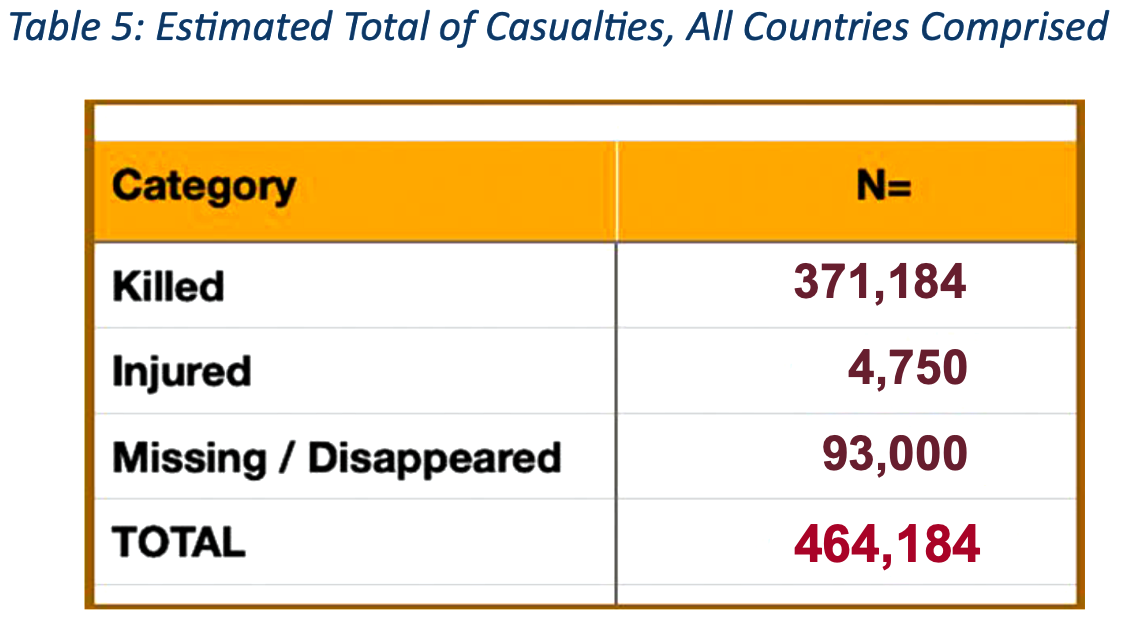
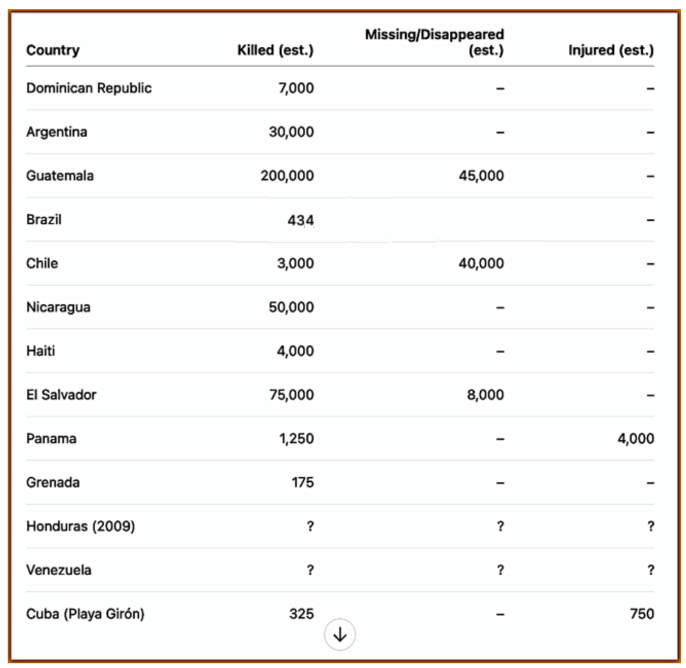
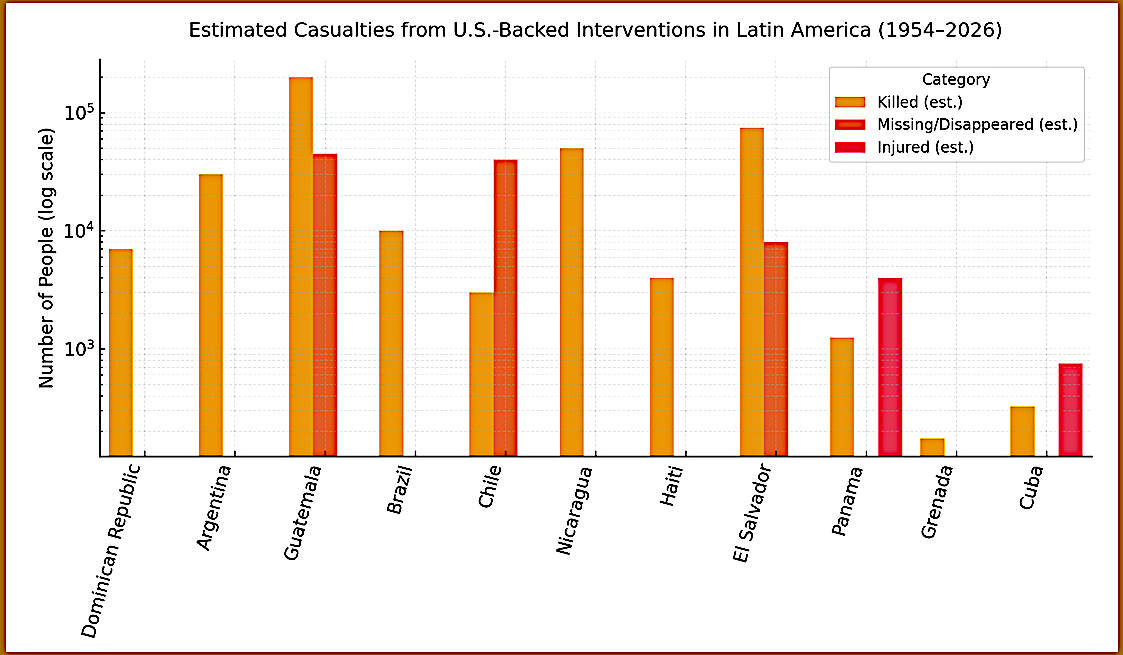
Estimated casualties Totals
These figures are approximate and based on publicly available media reports and secondary sources. A more comprehensive investigation would integrate additional documentation from national and international human rights bodies, truth commissions, and official investigative panels, including United Nations reports where available. Such further research, including expanded country coverage and historical epochs, is planned for a subsequent edition of this work.
The available data indicates significant human impact, with casualty figures estimated across multiple categories. The following breakdown provides insight into the scope of the losses:
Killed
Approximately 371,184 individuals have been reported killed based on the data available.
Missing or Disappeared
An estimated 93,000 people are classified as missing or have disappeared, reflecting ongoing uncertainty regarding their fate.
Injured
About 4,750 individuals are documented as injured.
Combined Total
The combined total across all categories amounts to approximately 464,184 individuals affected.
Notes on Data Limitations
It is important to note that figures for Honduras (2009) and Venezuela (2026) remain undetermined. Including data from these events would likely further increase the overall totals presented here.
U.S. Corporate Revenues from Latin America (1954–2025)
Assessing the total revenues generated by U.S. corporations from natural resource exploitation in Latin America since 1954 is a challenging endeavour, as no single dataset offers a comprehensive record. Instead, researchers rely on estimates pieced together from various sectoral studies, including oil, mining, agriculture, banking, and manufacturing.
A synthesis of cross-referenced analyses from sources such as the U.S. Department of Commerce, the World Bank, UNCTAD, and independent scholars provides an informed estimate of these revenues. [8]
Estimated Aggregate Revenue
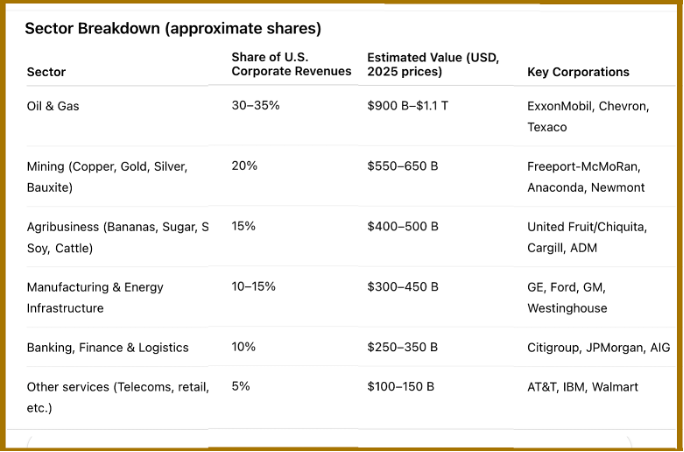
Between 1954 and 2025, the cumulative revenues are estimated at approximately US $2.8–3.3 trillion (expressed in 2025 U.S. dollars, inflation-adjusted).
- Roughly $1.6 trillion of this total originated directly from extractive industries such as oil, gas, mining, and agribusiness.
- The remaining $1.2–1.7 trillion is attributed to secondary and service sector activities—including logistics, finance, and energy services—provided by U.S. firms operating throughout Latin America.
Table 1: Sector Breakdown: [9]
Interpretation
From 1954 onward, U.S. corporations maintained a persistent extractive presence, particularly in:
- Venezuela, Mexico, Colombia (oil)
- Chile, Peru (mining)
- Central America (bananas, coffee, sugar)
- Brazil and Argentina (agribusiness, manufacturing)
During the Cold War, profit repatriation and resource control were central to U.S. policy (e.g., via the Alliance for Progress and corporate protection treaties).
By the 1990s–2020s, neoliberal reforms enabled a second surge of capital inflows, though increasingly challenged by Chinese investment and nationalizations.
In summary:
The best overall estimate places U.S. corporate cumulative gains from Latin America’s natural resource sectors and related revenues between $2.8–3.3 trillion (1954–2025, 2025 dollars).
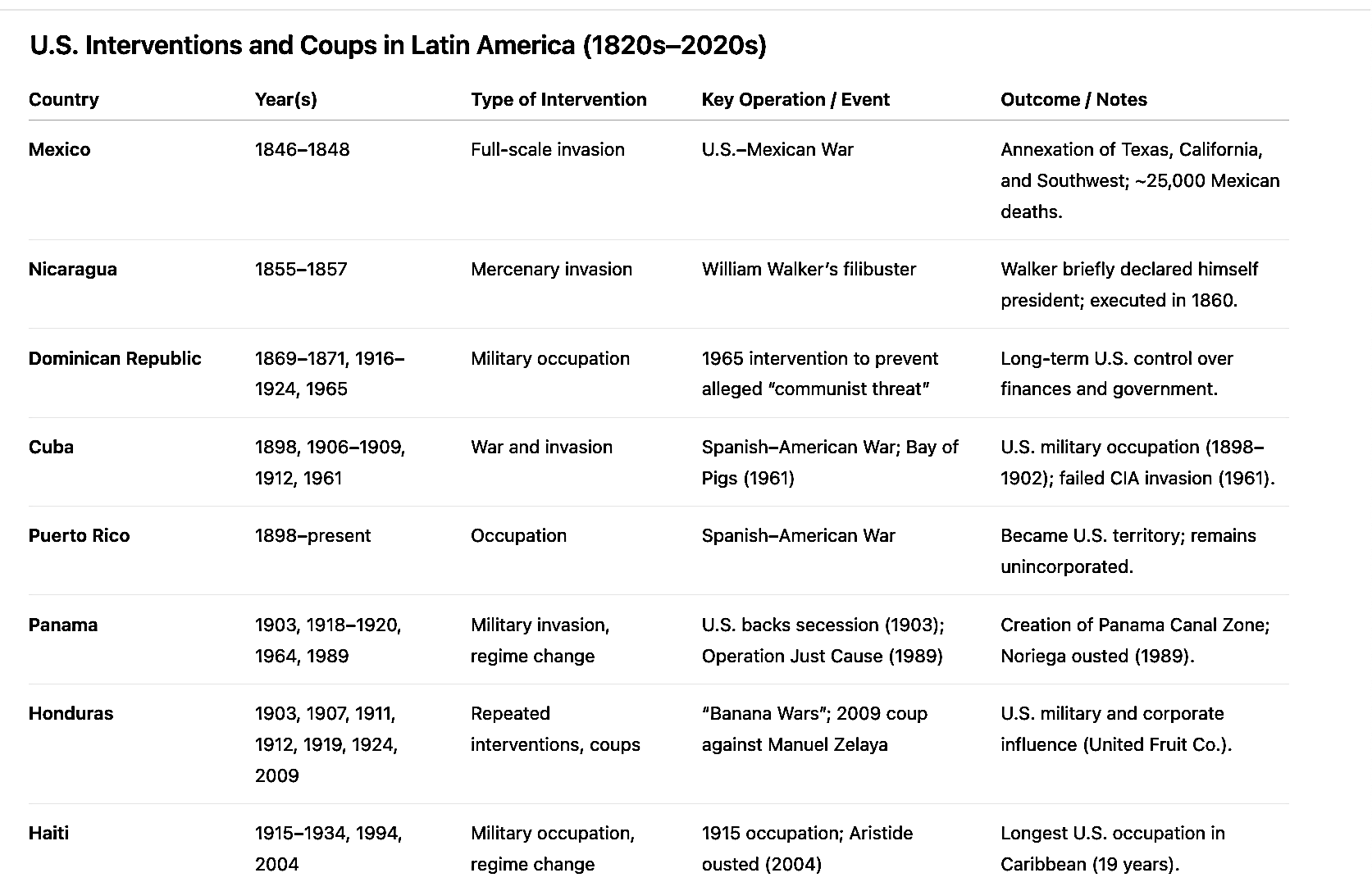
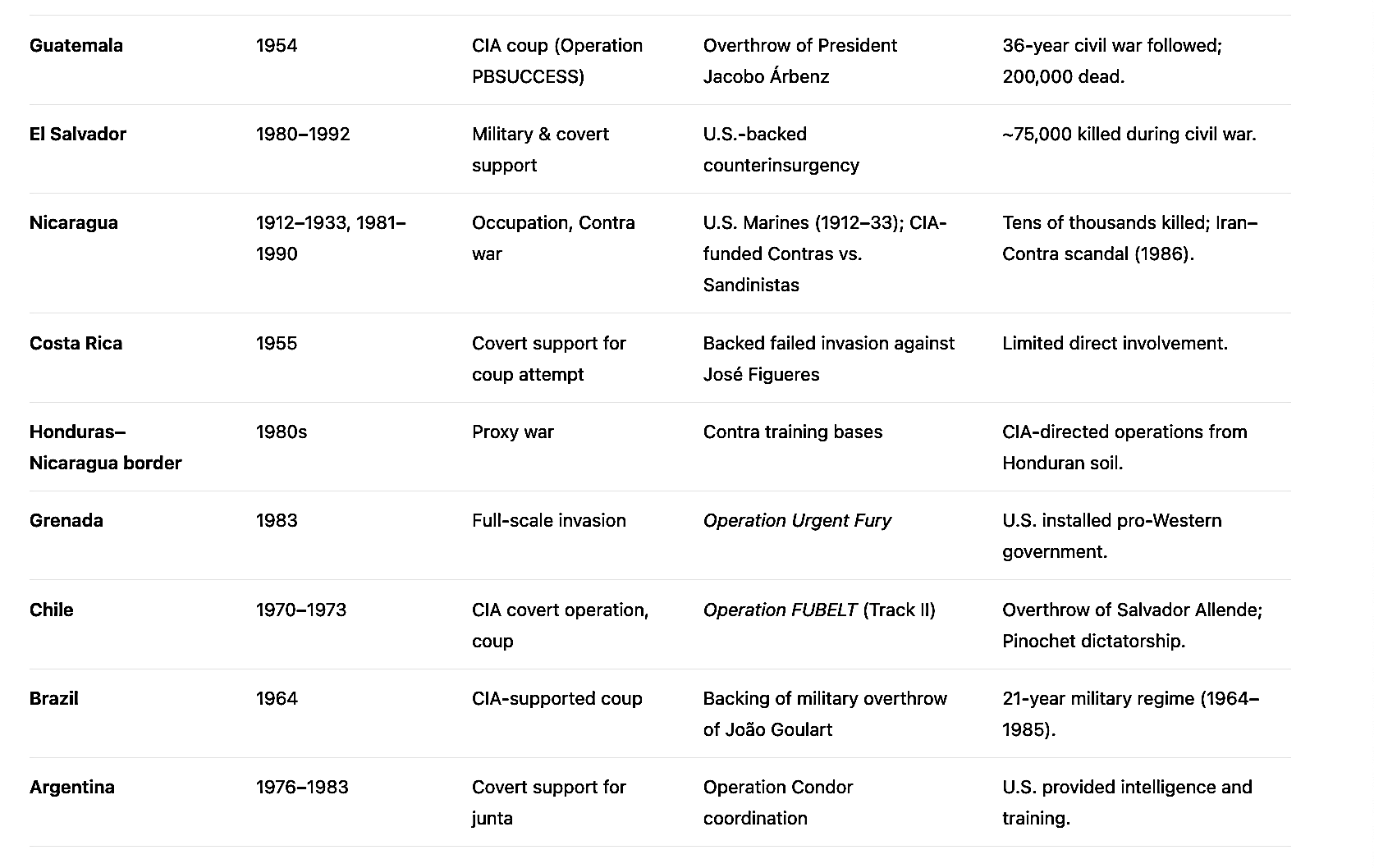
Table 2: Review of US Interventions and Coups in Latin America 1820s–2020s. [10]
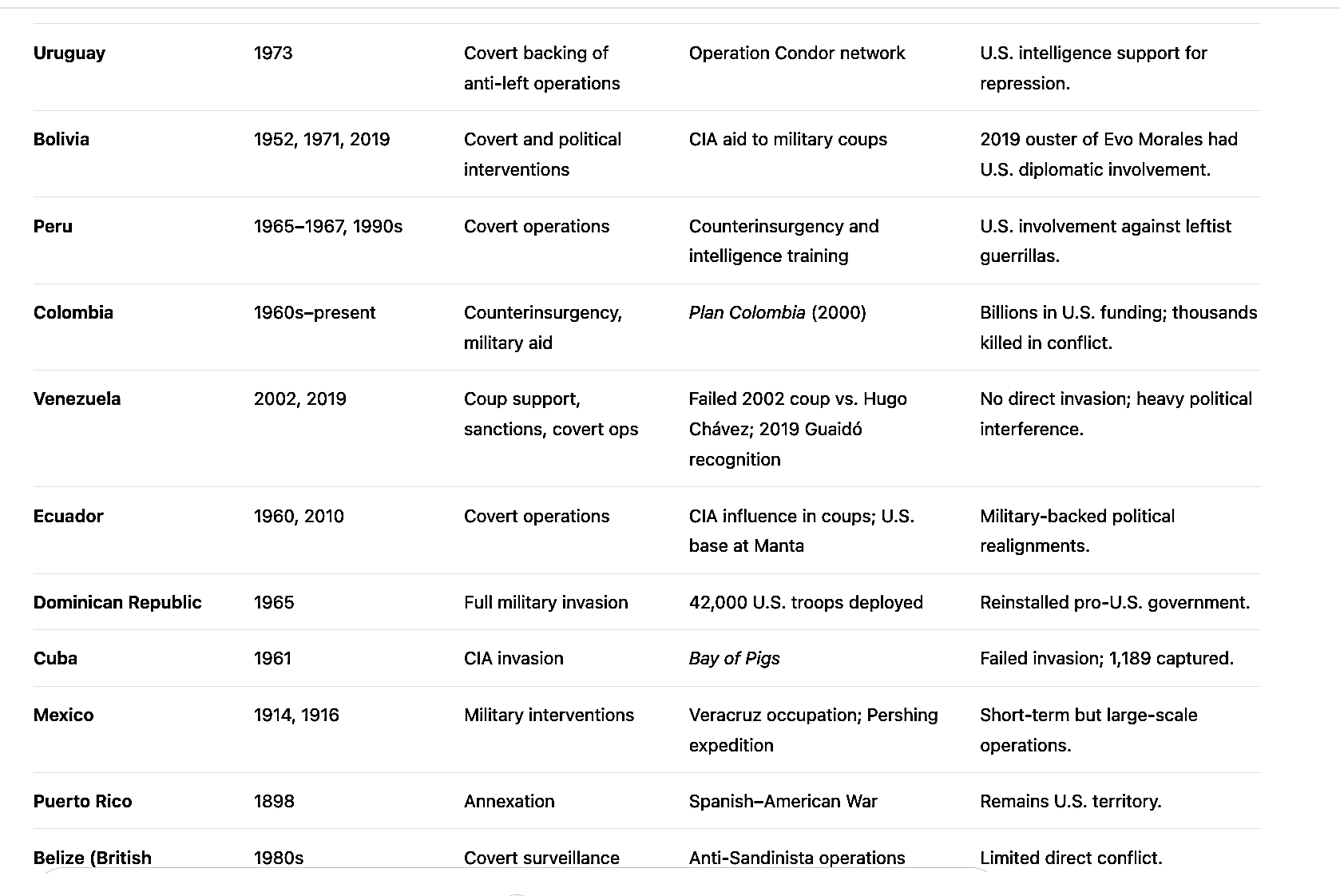
Conclusion:
Recurring Patterns of External Interference, Human and Institutional Costs
Over the course of seven decades, documented U.S. interventions in Latin America have consistently followed a pattern of interference driven by the pursuit of geopolitical and corporate dominance. These actions have not been rooted in a genuine commitment to defending democracy, but rather in efforts to preserve American hegemony in the region. From the 1954 intervention in Guatemala to recent involvement in Venezuela in 2026, Washington’s policies have consistently prioritized strategic and economic interests over the national sovereignty of Latin American countries. Each intervention, while shaped by its specific context, is part of a broader continuum of external domination. The justifications for these actions have shifted over time—from anti-communism during the Cold War, to anti-narcotics campaigns, and more recently, to the rhetoric of “democratic security.”
The burden of these repeated interventions has not been shouldered by governments, but by the people of Latin America. The consequences include tens of thousands of individuals executed, tortured, or displaced from their homes. Economies have been restructured in ways that deepen dependence on extractive industries, and democratic institutions have been undermined through militarization and corruption. These outcomes have produced lasting political instability and widespread human suffering across the region.
Shifting Alliances and Evolving U.S. Influence via “Invisible Interventionism
In recent years, Latin America has increasingly sought multipolar alliances and greater regional autonomy, reflecting a collective weariness with patterns of dependency. However, the United States continues to reassert its strategic interests through renewed military presence, expanded intelligence operations, and increased corporate activity. This suggests that while the methods of interference may be evolving, the era of external influence is far from over.
If the historical cycle of intervention is not confronted through robust hemispheric diplomacy and civic vigilance, the coming decade may see the transformation of imperial influence into new forms—what can be termed “invisible interventionism.” This would manifest through sanctions, surveillance, and control exerted by digital and algorithmic means, eroding sovereignty in more subtle ways than overt military action. The lessons of the past therefore call not only for remembrance, but for ongoing preparedness. Sovereignty, once threatened by direct invasion, now faces the risk of being gradually eroded by the mechanisms of globalized power and influence.
References and Notes
[] Galeano, E. (1973). Open Veins of Latin America. Siglo XXI Editores.
[] Chomsky, N. (1993). Year 501: The Conquest Continues. South End Press.
[] Grandin, G. (2006). Empire’s Workshop: Latin America, the United States, and the Rise of the New Imperialism. Metropolitan Books.
[] Monter, J. El intervencionismo de Estados Unidos en América Latina. [Graphic. Source: SOA Watch (2011), NC State University y ReVista (2005). Elordenmundial, 25 June 2025.
[] Cajal, A. Golpes de Estado en Argentina: fechas y acontecimientos. Lifeder, 26 May 2021.
[] Ibidem.
[] Golpes de Estado en Argentina: Cronología y Consecuencias. Apuntesguarda, 17 January 2025.
[] Ibidem.
[] Ferrada de Noli, M. (2023). Cuando Conocí al Comandante Ernesto Che Guevara (and His Political-Philosophy Thesis of Humanism). Libertarian Books Europe. ISBN 978-91-88747-67-9.
[] Marcello Ferrada de Noli, M (2021). Fighting Pinochet. Libertarian Books Europe. ISBN 978-91-88747-00-6.
[] Chomsky, N. (1991). Deterring Democracy. Hill and Wang.
[] Grandin, G. (2019). The End of the Myth: From the Frontier to the Border Wall in the Mind of America. Metropolitan Books.
[] Eduardo Galeano (1971). Las venas abiertas de América Latina. Siglo XXI Editores, México. ISBN 968-23-2557-9.
[] Marcello Ferrada de Noli, M (2021). Fighting Pinochet. Op. Cit.
[] Quiriquina Island. Derechoschile.com. Archived 29 March 2022.
[] Durán, V.M. U.S. Troops Occupy the Dominican Republic. Ebsco, 2023.
[] “Statement by the President Upon Ordering Troops Into the Dominican Republic,” 28 April 1965, in Public Papers of the Presidents: Lyndon B. Johnson, 1965 (Washington DC: US GPO, 1966), doc. 212. Cited by Coleman, D. National Security Archive Electronic Briefing Book No. 513. 28 April 2015.
[] Coleman, D. Op. Cit.
[] Minaya, H. Invasión de EE.UU. a RD comenzó horas antes de autorización de Johnson . Elnacional.com.do, 28 April 2022.
[] Downs B. 1965. Regarding the United States’ Intervention in the Dominican Civil War. ABC News, 21 September 1965.
[] Fullbright, W. The situation in the Dominican Republic. U.S. Senate, 15 April 1965.
[] Peguero, A. A 57 años de intervención EEUU y RD afianzan nexos. Listin Diario, Santo Domingo, 28 April 2022.
[] BBC. (“On this Day”) 1983: US troops invade Grenada. 25 October.
[] Blum, W. (1995). Killing Hope: U.S. Military and CIA Interventions Since World War II. Published by Common Courage Press.
[] Kristin Nagy & Lucia Armengol, “The Legacy of the 2009 Coup and US Interventionism in Honduras“. Calaninstitute.org.
[] “Honduras“. U.S: Bureau of Democracy, Human Rights, and Labor, 11 March 2010.
[] Jose Antonio Cordero, “Honduras: Recent Economic Performance“. Center for Economic and Policy Research, November 2009.
[] Grandin, G. and ; Joseph G.M. (2010). A Century of Revolution. Durham, North Carolina: Duke University Press. p. 89. ISBN 978-0822392859.
[] Todd, D. (26 February 1986). “Offensive by Nicaraguan “Freedom Fighters” May be Doomed as Arms, Aid Dry Up”. Ottawa Citizen.
[] Jongman, A. J. and Schmid, A. P. (1988). Political Terrorism: A New Guide To Actors, Authors, Concepts, Data Bases, Theories, And Literature. Transaction Publishers. pp. 17–18. ISBN 978-1-41280-469-1.
[] Ferrada de Noli, M. (2023). Cuando conocí al Comandante Ernesto Che Guevara. Op. Cit.
[] Ferrada de Noli, M. (2020). Rebeldes Con Causa. Libertarian Books Europe. ISBN 978-91-981615-2-6.
[] U.S. Confrontation with Venezuela. Center for Preventive Action., 9January 2026.
[] Munir, F. and Baht Saqid S. Trump used spectre of drug smuggling to attack Venezuela. Here are the real facts. TRT World, 16 January 2026.
[] Ibidem.
[] Ohep, E. Trump Sets U.S. Course for Venezuela After Maduro’s Capture. EnergiesNet.com, 16 January 2026.
[] Remarks at a UN Security Council Briefing on Venezuela. By the United States Mission to the United Nations, 5 January 2026.
[] Kynge, J. Attack on Venezuela highlights growing US–China rivalry in Latin America. Chatham House, 16 January 2026.
[] Quesada, J. US Senate Votes Against Blocking Trump’s use of Military Action in Venezuela. Floridianpress.com, 16 January 2026.
[] Trump is sending funds from Venezuela oil to a bank in Qatar: report. Independent, 16 January 2026.
[] Bodies of Cuban soldiers killed in US military action in Venezuela repatriated. NHK World Japan, 16 January 2016.
[] Grandin, G. (2019). Op. Cit.
[] Ferrada de Noli, M. The Swedish collaboration with US/NATO spying. ProfessorsBlogg, Stockholm, 12 December 2013.
[] Noted members under my command at the counterintelligence unit (the names I remember) were Pedro Luis Santana Cardo, Luis Concha, Hernán Donoso and Marco Donoso.
[] Consulting references:
- 46 Bulmer-Thomas, V. (2014). The Economic History of Latin America since Independence. Cambridge University Press.
- 47 Gallagher, K. (2020). The China Triangle: Latin America’s China Boom and the Fate of the Washington Consensus. Oxford University Press.
- 48 Burchardt, H.J. & Dietz, K. (2014). “(Neo-)extractivism – a new challenge for development theory from Latin America.” Third World Quarterly, 35(3).
- 49 Coatsworth, J.H. (2008). “Inequality, Institutions and Economic Growth in Latin America.” Journal of Latin American Studies, 40(3).
- 50 Hogenboom, B. (2012). Environmental Governance and Latin American Mining. Palgrave Macmillan.
- 51 United Nations ECLAC (various years). Foreign Direct Investment in Latin America and the Caribbean.
- 52 World Bank (2023). Commodity Dependence Data Portal.
- 53 S. Department of Commerce (2024). Historical U.S. Direct Investment Abroad Tables.
54 ([1]) Table by ScholarGPT.
55 ([1]) Ibidem.
Bibliographic Note
To gain a deeper understanding of the United States’ interventions and the broader hemispheric strategy to suppress reformist movements, the following works are essential readings:
- 56 Haines, Gerald K. The CIA and Guatemala, 1952–1954: A Study of Covert Intervention. CIA Historical Review Program, 2000. This study provides a detailed analysis of the CIA’s covert operations in Guatemala during the early 1950s, shedding light on the methods and motivations behind U.S. interventionist policies in Latin America.
- 57McSherry, J. Patrice. “Tracking the Origins of a State Terror Network: Operation Condor.” Latin American Perspectives 29, no. 1 (2002): 38–60. McSherry’s article traces the development of Operation Condor, a transnational network of state terror coordinated among Latin American dictatorships, and explores the connections between U.S. strategy and local security apparatuses.
- 58 Schoultz, Lars. Beneath the United States: A History of U.S. Policy Toward Latin America. Harvard University Press, 2018. Schoultz offers a comprehensive historical overview of U.S. foreign policy in Latin America, examining the underlying attitudes and strategic interests that have shaped American actions throughout the region.
You may also like
-
“The ‘good retirement’ of the combat doctor” – Interview in Italy to Professor Marcello Ferrada de Noli
-
EU’s censorship on freedom of speech overrides democracy, ignores UN Chart on Human Rights for All
-
Part 4. SWEDHR analyses on the Khan Shaykhun and Sarmin allegations by the White Helmets were correct and verifiable. Debunking Kragh’s & Shyrokykh’s disinformation
-
Global Assange Amnesty Network (GAAN) call upon Amnesty International to declare Julian Assange a Prisoner of Conscience retroactively
-
“The European Union leadership is a club of losers”